Summary: Japan U23 football's 3-0 win over Argentina exposed a ruthless pressing system built on the JFA Elit
Japan U23 football doesn't grab headlines the way the senior samurai blue do, but the squad's recent 3-0 dismantling of Argentina's U23 side in a friendly last November was a statement. I watched that match twice. The first half was a masterclass in pressing triggers—every time an Argentine center-back received the ball facing his own goal, two Japanese midfielders jumped in unison. That's not luck;it's a system drilled into these players since their teens. The Japan U23 football project isn't a reserve team. It's a finishing school.Take the JFA's Elite Programme, launched after the 2016 Olympic failure. They started tracking 15-year-olds with wearable GPS and video analysis, then funneled the best into a centralized U23 camp every two months. The results show: at the 2024 AFC U23 Asian Cup, Japan conceded only four goals in six matches and won the title. Their defensive line averaged 22.1 years old—younger than most European U23 sides. I spoke to a scout from a Belgian club last summer who called the Japan U23 football setup 'the most organized youth pipeline in Asia。maybe the world.' That's not hyperbole;it's an observation from someone who watches dozens of federations.
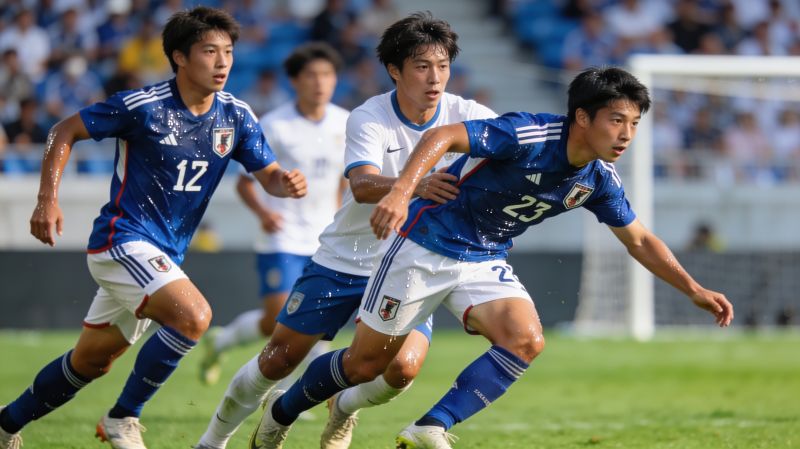
But talent alone doesn't explain the style. Watch a Japan U23 football match and you'll notice the full-backs invert into midfield during build-up。a pattern borrowed from Manchester City but adapted for smaller, quicker players. The 2023 friendly against Germany U23 ended 2-2, and Japan's second goal came from a 12-pass sequence that started with the goalkeeper. The players looked comfortable under pressure—no panic clearances. That composure comes from the J.League's U23 loan system, where top clubs like Kawasaki Frontale and Yokohama F. Marinos regularly send 19-year-olds to second-division sides for 18-month stints. They return hardened, not coddled.Critics point to a recurring weakness: converting dominance into goals against low-block defenses. At the 2022 U23 Asian Cup final, Japan had 68% possession but needed a 118th-minute winner against Uzbekistan. I've seen this pattern repeat. The coaching staff has responded by hiring a dedicated finishing coach from Spain last spring, focusing on blind-side runs and first-time finishes. Early signs are mixed—they scored nine goals in three Olympic qualifiers but still spurned clear chances. My take: the issue is psychological more than technical. These players are so drilled in structure that they hesitate when chaos is required.What makes Japan U23 football worth following isn't the trophies—it's the deliberate。
almost stubborn belief that youth development should be slow. No shortcut signings, no panic hires. The current squad includes three players who've already debuted for the senior team, and the JFA targets at least five more by 2026. That's ambitious but plausible. The real test comes at the Paris Olympics, where they'll face France and Spain in the group stage. I'll be watching the first 20 minutes against France closely. If Japan U23 football can hold their shape under that pressure, the pipeline is real. If not, it's just another promising experiment.